We Surveyed Thousands of Dog Owners. Here's What We Built With It.
Category: Brand Marketing
Client: Sundays for Dogs
Project Type: Brand Positioning / Customer Research
Timeline: ~3 months (research phase)
Most brand positioning projects start with a whiteboard. Ours started with a spreadsheet of thousands of Sundays for Dogs subscribers and a very long list of questions we needed answered.
Sundays for Dogs makes human-grade, air-dried dog food, a product that genuinely stands out even in the D2C pet food market. But standing out on a shelf and standing out in someone's mind are two different things. Our job was to find out what Sundays actually meant to the pet parents buying it—not what the brand assumed, but what customers said when nobody was selling to them. From there, we built a new brand book and customer framework that still influences web, landing pages, paid ads, and email strategy today.
The Research Strategy
The best brand copy doesn't come from a brainstorm. It comes from your customers. So before we wrote a single word, we listened — actually listened, not just gathered inputs to confirm what we already thought.
The research phase ran about three months and covered a lot of ground:
Mass surveys sent to thousands of past and current subscribers
In-depth customer interviews, each roughly 30 minutes, conducted remotely and securely recorded
Direct email outreach to dozens of customers for additional qualitative feedback
The interviews were the most valuable part. There's a difference between what people click on a survey and what they say when you ask them why they switched their dog's food. The language people use unprompted, the specific words, the comparisons they make, the things they're embarrassed to admit they care about, that's where brand positioning lives.
What We Found
Dog parents are a specific kind of customer. They're skeptical of marketing claims (because pet food marketing has historically been... a lot). They care deeply about ingredients but don't always have time to read them. And when they find something that works, when their dog is excited to eat, when their coat looks better, when they finally stop worrying, they don't just stay loyal. They tell everyone.
The research told us that Sundays' customers weren't just buying food. They were buying relief. The reassurance that they were doing right by their dog without making their own life more complicated. That single insight shaped everything we wrote.
How It Influenced a New Brand Vision
The positioning framework we developed became the backbone of Sundays' brand relaunch, giving their internal teams a clear, research-backed foundation to build from across every channel.
The copy we produced from that research now lives across:
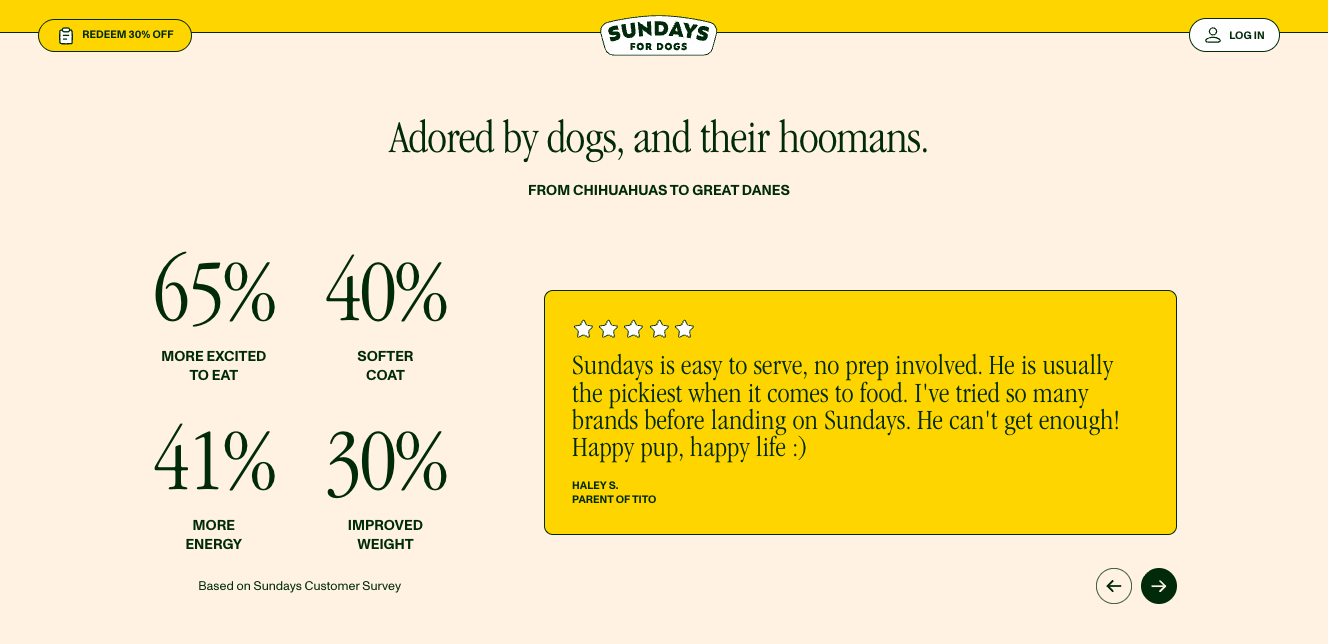
The Sundays homepage (including the customer success metrics you see featured there today)
Multiple landing pages across their site
Paid media campaigns running on Meta, Google, TikTok, etc.
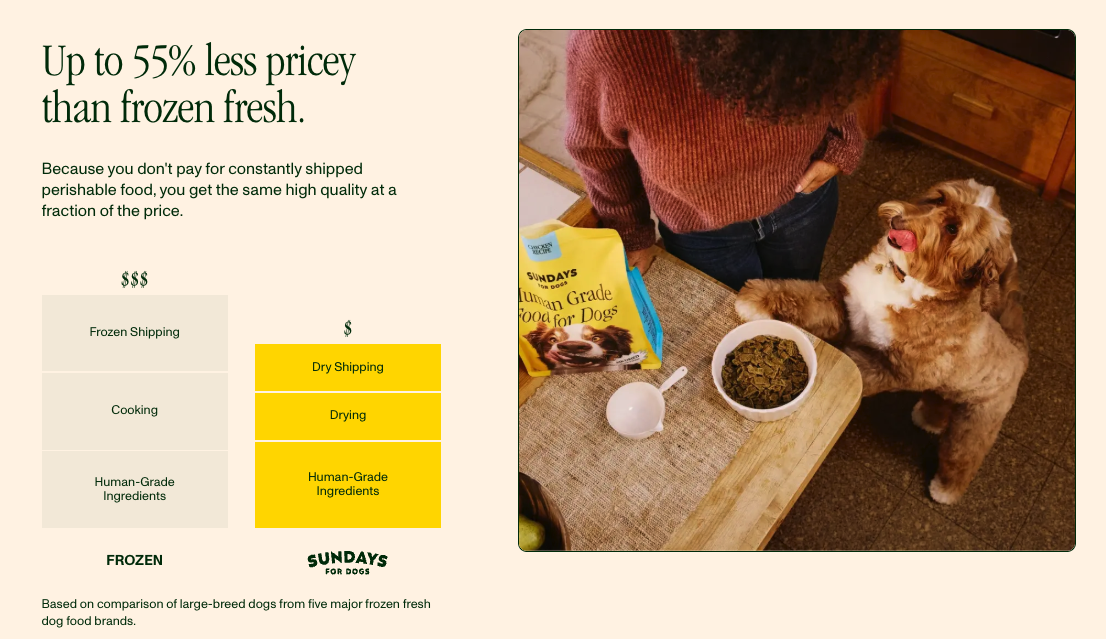
That last part matters. Copy that works across paid media isn't just good writing. It's writing that's been stress-tested against what real customers actually respond to. When the messaging is grounded in their own words, it doesn't need to be reinvented every quarter. It just keeps performing.
For Brands Considering This Kind of Project
Customer research sounds expensive and slow. And sure, it takes time — ours took three months before a single word of copy was finalized. But consider the alternative: writing brand positioning from assumptions, testing it in market, watching it underperform, and starting over. That costs more, in every sense.
The research phase is the strategy. Everything after that is execution.
You don't need a massive budget to do this well. In fact, I did most of the interviews and survey writing myself! You need the right questions, a genuine willingness to hear uncomfortable answers, and someone who knows how to turn what customers actually say into copy that converts. That's what we do!
Interested in a brand positioning project for your team? Get in touch.